

Dream About Missing a Train: How to Understand This Fear
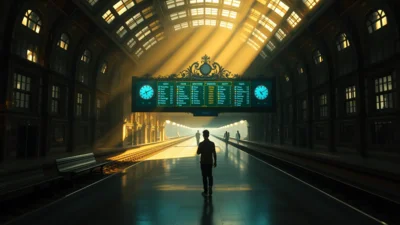
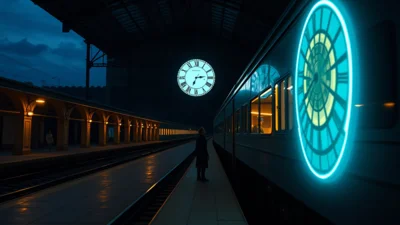
The slam of doors, the whistle blowing as the train pulls away without you—it's a dream that leaves a specific, hollow ache. More than general lateness, this version carries the weight of a missed connection, a path not taken. If you woke with a sense of irreversible loss, you're grappling with a profound human fear: that life's big opportunities are finite, and you might be left on the platform.
Dreaming about being late for a train symbolizes anxiety about life direction, missed opportunities, and the fear that you're on the wrong track. The train represents a planned journey, a career path, a relationship timeline, or a major life decision that feels like it's departing without you. This isn't about daily hustle; it's about existential timing. The emotion is less frantic panic and more profound regret—the chilling thought that you've missed your chance.
This dream often visits during crossroads: considering a career change, facing a relationship milestone, or at an age where you reassess your life's trajectory. It reflects the tension between your current station and where you thought you'd be by now. As a specific variant of dreams about lateness, the train scenario adds the dimension of a set, public schedule—society's or your own internal timeline. British psychologist Ian Wallace suggests such dreams appear when we feel external pressures dictating our pace, forcing a choice between conformity and our authentic path. The dream might also connect to feelings of being derailed by unexpected events, similar to the disruption in dreams about train wrecks.
Where does this fear of the "departing train" manifest? Are you watching peers advance in their careers while you feel stagnant? Is there a personal goal, like starting a family or buying a home, that feels like it's slipping away due to timing or resources? Or perhaps a creative project you've delayed, fearing its moment has passed? The dream isn't a verdict that you've failed. It's a mirror showing where you feel out of sync with your own expectations or external benchmarks. Seeing this clearly is the first step toward either catching the next train or deciding to build your own track.
Dream Analysis & Interpretation
Deeper Psychological Analysis
Key Insight
Often, the train you miss in the dream isn't the only one leaving the station—it's just the one you were fixated on. The real opportunity lies in noticing the other tracks, or even the freedom of the open platform.
Deeper Contexts: Analytical Lenses for Your Dream About Missing a Train
The Life Path Archetype
Source: Carl Gustav Jung, founder of analytical psychology
The Cultural Timeline
Source: Theresa Cheung, dream expert and bestselling author
What to Do Next: Platform Perspective: Mapping Missed & Alternative Paths
This dream centers on a singular missed connection. This technique helps you widen the lens, seeing the platform of your life as a place of multiple departures, not a site of one failure.
- Name the missed train: Write down exactly what the missed train symbolizes for you (e.g., "the career promotion", "the chance to live abroad", "starting a family by 30"). Be specific.
- Draw your platform: On a large paper, draw yourself on a platform. From you, draw multiple sets of tracks heading in different directions. Label each track with a current or potential life path, not just the one you missed.
- Board a different train: Choose one alternative track that feels even slightly interesting or peaceful. For 15 minutes, write a brief "travel journal" entry from a future where you took that path. Describe what you see, feel, and achieve.
- Conduct the station master interview: Ask yourself: If you were the station master of your own life, responsible for all schedules, would you keep the same timetable? What one departure would you delay, cancel, or add?
- Schedule the next departure: Based on your map, commit to one small, concrete action this week that moves you toward any track (even a new one) that feels aligned, not rushed.
💡 Expert Tip:
The power of this exercise is in shifting from a passive passenger who missed a train to the active architect of the station itself, regaining narrative control over your life's journey.
What This Builds:
This technique builds strategic foresight and scenario planning skills. By mapping alternative futures, you train your mind to see possibilities beyond a single point of failure—a critical skill for innovation, career pivoting, and resilient life planning.
Questions for Deeper Reflection
What "train" (opportunity or path) do you believe you have missed? What is the evidence that this door is truly closed forever?
If you could design your ideal life schedule without any external pressure, what would the next 5 years look like? How does it differ from your current timeline?
Who or what in your life makes you feel like you're running to catch up? What would it feel like to let go of that comparison?
What Comes Next?
Frequently Asked Questions (FAQ)
What does dreaming about missing a train mean for my career?
In a career context, this dream often surfaces during promotion cycles, job searches, or industry shifts. It reflects anxiety about being passed over, becoming obsolete, or missing a "big break." It's a signal to audit your skills and network, not a prediction of professional doom.
Is there a biblical meaning to missing a train in a dream?
While trains aren't biblical, the theme of missing a divinely appointed time or season is. Some biblical dream interpreters might relate it to passages about being watchful and ready (like the parable of the ten virgins), suggesting a call to spiritual preparedness for opportunities God provides.
Why do I have this dream after a breakup or divorce?
After a relationship ends, the "train" often symbolizes the shared future you planned together that now feels departed. The dream processes the grief of that lost timeline and the anxiety about starting over on a new, unknown path alone.
How can I stop having recurring dreams about missing my train?
Recurrence means the underlying anxiety about life direction isn't being addressed in waking life. Beyond dream interpretation, practical steps like career counseling, life coaching, or simply creating a vision board for alternative futures can reduce the dream's frequency by actively engaging with the fear.




Comments and User Dreams
Be the first to share your dream or opinion!