
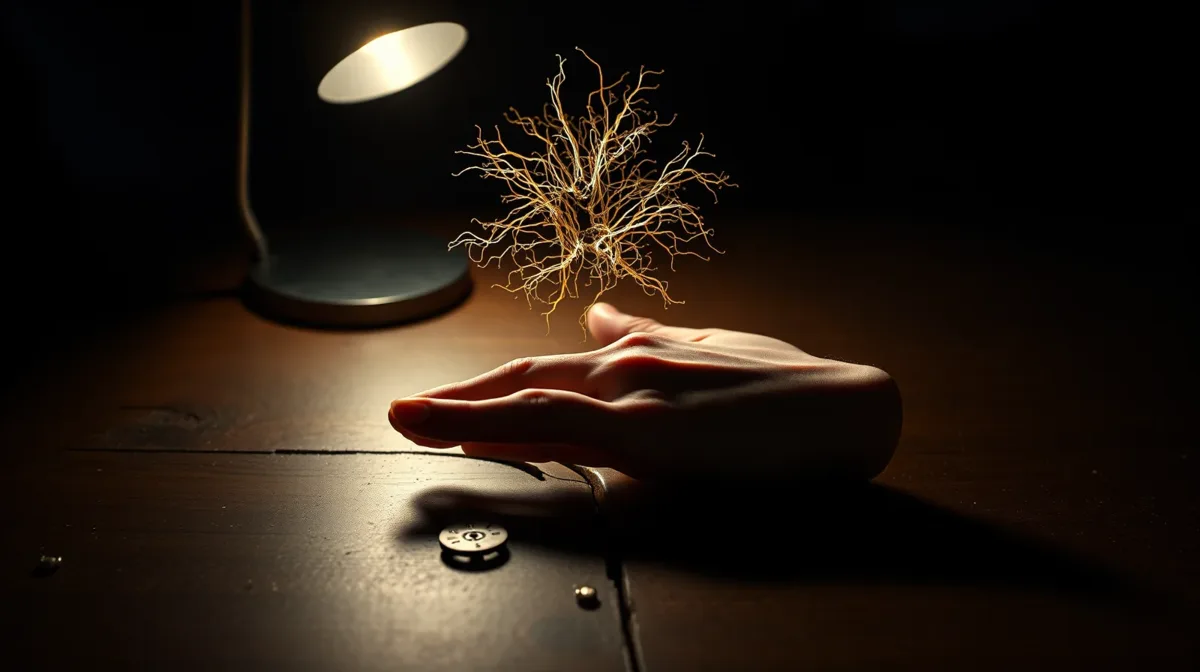
Breaking Finger Dream: How to Heal This Symbolic Fracture
The snap. The jolt of pain that feels too real. Waking from a dream where you break a finger leaves a visceral echo of shock and vulnerability. It's a direct hit to your sense of capability. That feeling of something essential being damaged matters. This guide will help you understand what's truly "broken," why your mind chose this violent metaphor, and how to start the healing—both in the dream and in your life.
A dream about breaking a finger is a powerful communication about fractured agency. The immediate feeling is one of personal failure or a specific, crippling setback. You feel this because the dream targets your ability to do, to manipulate your environment, to point the way. It often strikes when a plan you were carefully executing ("handling") suffers a major disruption, or when a promise you made (your "word," sealed with a handshake) feels impossible to keep.
The symbol carries a crucial duality. A broken finger can represent an actual failure or loss of skill that halts progress. But just as often, it's a necessary break—a forced pause that prevents a worse injury or exposes a flawed approach. British psychologist Ian Wallace's analysis of injury dreams suggests they frequently appear not as prophecies of doom, but as simulations of worst-case scenarios, allowing you to psychologically prepare for setbacks. This concept of a protective simulation is a key aspect of dreams involving fingers.
Look at the context of the break. Was it an accident, implying negligence or fragile conditions? Or an attack, pointing to external sabotage or conflict? Your answer reveals whether the threat is internal (your overconfidence) or external (a competitive fight). This dream hands you the x-ray. It shows you the crack in your plan, your confidence, or a commitment. Seeing it clearly is what allows you to decide whether to set it, protect it, or learn to function brilliantly without it.
Dream Analysis & Interpretation
Deeper Psychological Analysis
This dream functions as a high-stakes simulation. Your brain is running a drill: "What if my primary method fails?" By experiencing the emotional and physical shock of the break in a safe dream space, you build resilience and contingency planning for waking life. It's less about predicting injury and more about stress-testing your systems and emotional responses to sudden loss of function.
Key Insight
Often, the finger that breaks in the dream isn't the one you use most—it's the one you rely on for a specific, delicate task you've been taking for granted. The dream highlights your dependence on a single point of failure.
Deeper Contexts: Analytical Lenses for Your Dream About Breaking a Finger
Threat Simulation and Emotional Processing
Source: Antti Revonsuo, neuroscientist and evolutionary psychologist
Revonsuo's Threat Simulation Theory posits that dreams, especially anxiety dreams, serve an evolutionary purpose by allowing us to rehearse responses to dangerous situations in a safe environment. A dream of breaking a finger could be a cognitive rehearsal for handling a sudden loss of a key ability, helping to reduce panic and improve adaptive responses if a similar real-world setback occurs.
The Psychology of Injury and Identity
Source: Dream analyst Lauri Loewenberg, certified dream analyst with 20+ years experience
Loewenberg notes that dreams about breaking bones often surface during times of significant life change or when one's identity is tied to a specific skill (e.g., a writer, musician, or surgeon). The dream reflects a deep-seated fear that if that skill is compromised, the very sense of self might fracture with it. It's a call to diversify your identity and sources of self-worth.
What to Do Next: The Functional Adaptation Protocol
The frustration from this broken finger dream comes from a blocked action path. This protocol helps you map the break, then engineer a workaround, building resilience.
- Diagnose the Break: Name it. "My broken finger is my plan for X." Be specific. Write down the exact step that feels shattered.
- Immobilize & Assess: Consciously decide to "splint" that plan. For 24 hours, forbid yourself from working on it directly. This creates psychological space.
- Map Alternative Nerve Paths: Brainstorm 3 ways to achieve the same goal without using the "broken" method. Think absurdly: use your other hand, use your feet, use a tool. The goal is lateral thinking.
- Prototype the Strongest Alternative: In the next 48 hours, take one small, concrete action using the most promising alternative. It doesn't have to be perfect—it has to be different.
- Document the Learning: After the test, write one sentence: "When X broke, I learned I could also do Y." This reinforces adaptability.
💡 Expert Tip:
The "immobilization" step is key. It prevents you from reinjuring the situation by rushing back in with the same flawed approach.
What This Builds:
This protocol builds strategic agility and contingency planning. By practicing mental adaptation to simulated failure, you develop a leader's or innovator's mindset—seeing setbacks not as dead ends, but as puzzles that demand creative rerouting, a skill vital in fast-changing professional and personal landscapes.
Questions for Deeper Reflection
What specific "tool" or skill in your life (symbolized by the finger) feels most vulnerable or under threat of breaking right now?
If this break forces you to use your other hand, what neglected strength or alternative approach might you discover?
On a scale of 1-10, how much pressure was on that "finger" before it broke? What would it take to reduce that pressure by two points?
What Comes Next?
As you work on healing this symbolic fracture, watch your dreams. Successful adaptation might lead to dreams of skillful bandaging or using a new tool effortlessly. If the underlying pressure isn't resolved, the dream symbol might intensify into a vision of a more severe break or complete loss, urging a more radical solution or acceptance.
Frequently Asked Questions (FAQ)
What does it mean if I dream about breaking my finger in an accident?
An accidental break often points to self-perceived clumsiness, rushed decisions, or neglecting safety in a waking-life project. It suggests the "break" stems from your own actions or oversight, urging a careful review of your methods and pace.
Is dreaming of a broken finger a sign of bad health?
Rarely a literal health warning. It's overwhelmingly a psychological metaphor for a break in function, commitment, or communication. However, if you have real anxiety about a physical injury, it can manifest symbolically. Always consult a doctor for physical concerns, not a dream dictionary.
Could this dream relate to breaking a promise?
Absolutely. Fingers are associated with oaths and pledges (crossing fingers, pointing in promise). Breaking a finger can symbolize the stress, guilt, or perceived failure of breaking your word—or someone breaking their promise to you, which feels just as damaging to your trust.
How is breaking a finger different from dreaming of teeth crumbling?
Both involve breakage, but the focus differs. Teeth crumbling relates to foundational confidence, personal power, and how you "chew" on life's problems. A broken finger is more about a specific action, skill, or delicate manipulation failing. One is about your bite; the other is about your touch.



Comments and User Dreams
Be the first to share your dream or opinion!