
Dream About Walking on a Mountain: What Is This Journey Trying to Tell You?
The rhythm of steady steps, the crunch of gravel, the feeling of being en route. Dreams of walking on a mountain are less about dramatic struggle and more about the journey itself. You wake with a sense of purposeful motion. If the dream felt peaceful, arduous, or simply ongoing, it's reflecting your current pace through a significant life challenge or period of growth. Let's explore the path you're on.
Dreaming of walking on a mountain symbolizes being actively engaged in a long-term life process, making steady progress toward a goal, or navigating a period of personal development. Unlike climbing, walking suggests a more sustainable, perhaps familiar, pace. It's about the journey, not the immediate summit. This dream often appears when you're in the midst of a change—a career path, a healing process, a educational journey—where consistency matters more than dramatic leaps.
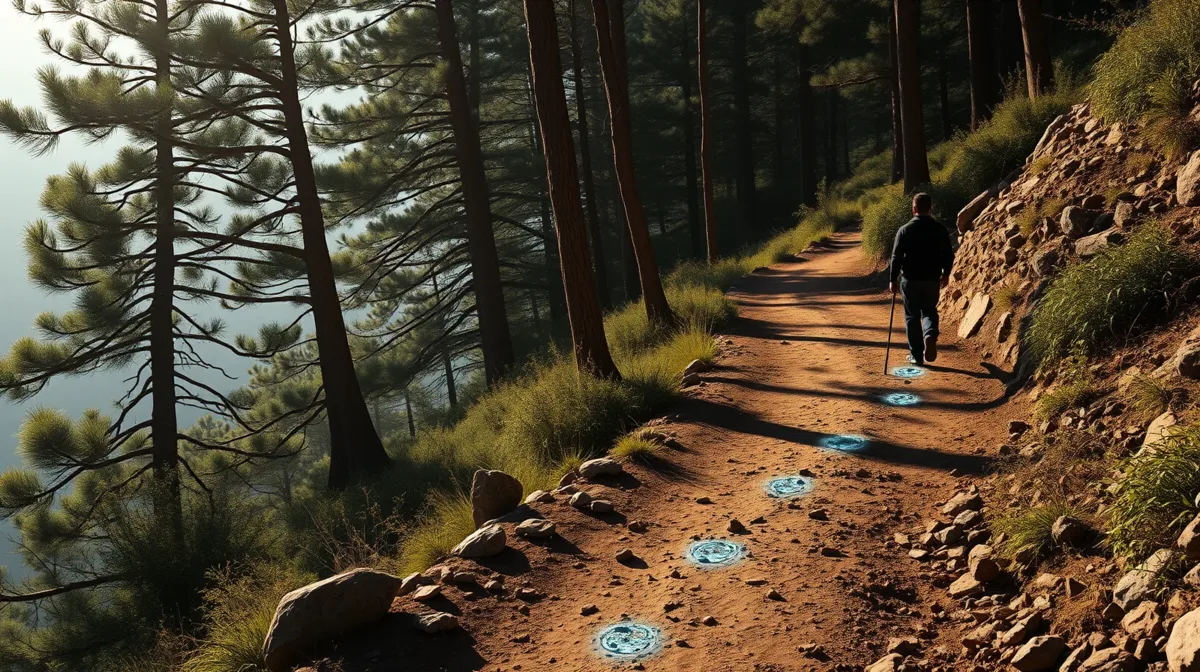
Examine the path's nature. Was it a clear trail or a rocky scramble? A gentle slope or a steep incline? These details mirror the perceived difficulty and clarity of your real-life path. The presence of a walking stick or companion can symbolize support systems. This is a core, grounded expression of mountain dreams, emphasizing progress and endurance. It shares thematic ground with dreams about a long road or travel.
So, what path are you walking in your waking hours? Are you steadily acquiring a new skill? Methodically working through relationship issues? Persistently applying for jobs? The dream validates that you are moving. It asks you to check in with your pace: Is it sustainable? Are you noticing the scenery, or are you head-down, missing the point? The act of walking implies forward motion, even if the summit isn't yet in sight. That in itself is an achievement worth recognizing.
Dream Analysis & Interpretation
Deeper Psychological Analysis
Key Insight
Sometimes, the purpose of the walk isn't to reach the top, but to discover who you are while you're on the path.
Deeper Contexts: Analytical Lenses for Your Dream About Walking on a Mountain
Procedural Memory and Habit Formation
Source: Matthew Walker, sleep scientist and author of 'Why We Sleep'
The Path as the Way
Source: Lao Tzu, ancient Chinese philosopher
What to Do Next: Pattern Journal
Walking dreams are about noticing patterns in your progress. This technique helps you track the subtle rhythms and obstacles on your path to build awareness and adaptability.
- Log the terrain: For one week, keep a simple journal. Each evening, note: "Today's walk involved [metaphorical terrain, e.g., a muddy patch, a sunny stretch]."
- Mark the milestones: No matter how small, record one "step" of progress each day related to your larger goal. It could be sending an email, practicing for 10 minutes, or having a difficult conversation.
- Identify the weather patterns: At week's end, review. What external or internal "weather" (stress, inspiration, distraction) made the walk easier or harder on certain days?
- Adjust your gear: Based on the pattern, choose one adjustment for the next week. Example: "On low-energy days (rainy weather), I will take shorter, more focused steps."
- Celebrate a vista point: At the end of the week, consciously acknowledge the ground you've covered. Look back at your entries as a "view" of your progress.
💡 Expert Tip:
The act of journaling itself creates a "trail" you can look back on, which builds motivation and provides concrete evidence of progress when the path feels long.
What This Builds:
This practice develops metacognition—the ability to observe your own thinking and behavioral patterns. It's a critical skill for lifelong learning, self-management, and adjusting strategies in complex projects or personal development.
Questions for Deeper Reflection
If your waking life journey had a "trail name" like hikers use, what would it be, and why?
What's one small piece of "scenery"—a minor win, a moment of learning—you've passed recently on your path that you didn't stop to appreciate?
If you could ask for one thing to make this walk more sustainable or enjoyable, what would it be?
What Comes Next?
Frequently Asked Questions (FAQ)
What does it mean to dream about walking on a mountain path?
It symbolizes being in the midst of a life journey or working steadily toward a goal. The dream highlights your current pace, endurance, and the nature of the path itself—whether it's smooth, rocky, lonely, or shared—as a reflection of your real-world progress.
Is walking on a mountain a positive dream?
Generally, yes. It indicates forward motion and engagement with a meaningful process. Even if the walk is difficult, it shows you're actively dealing with challenges rather than avoiding them. The positive aspect is in the action itself.
What if I was walking alone on the mountain?
Solitary walking often reflects a journey of self-reliance, introspection, or a path that feels personally unique. It can indicate independence but also potential feelings of isolation. Consider whether you have adequate support in your waking life or if you prefer this solitary, self-directed pace.
Why do I dream of walking but never reaching the top?
This is common and underscores the dream's focus on the process, not the destination. It may reflect a long-term goal where the outcome is still far off, or it might be a reminder to find satisfaction in the daily effort and growth, not just the final achievement.




Comments and User Dreams
Be the first to share your dream or opinion!