
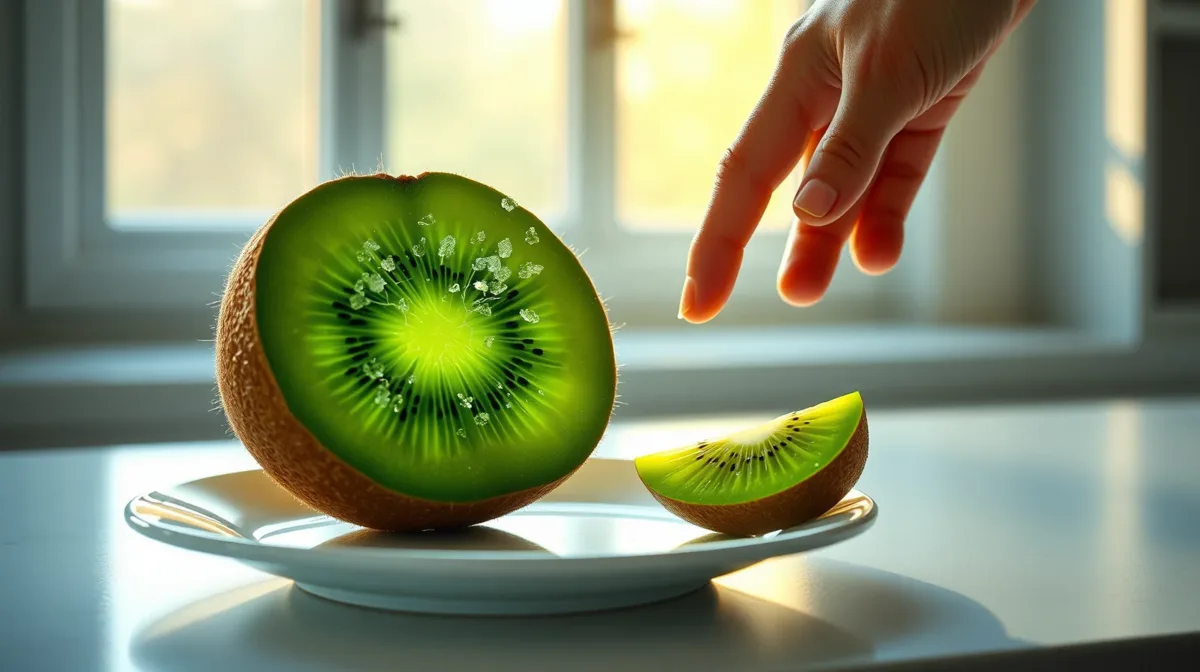
What Does It Mean When You Dream About Sour Taste Kiwi?
You wake with the distinct tang of sour kiwi on your tongue—a strange, vivid impression. It's a jolt to the senses, and you can't help but wonder: what was that about? Dreams of fruit often carry rich symbolism, and the sour kiwi is no exception.
This dream is your subconscious handing you a tart puzzle piece. It might feel odd or even unpleasant, but it's packed with meaning about your current emotional state and how you're approaching life's sweetness and acidity.
Kiwis in dreams often represent something unique, vibrant, or a bit exotic. But sourness adds a sharp twist. The sour taste suggests disappointment, unmet expectations, or a situation that turned out differently than hoped. The kiwi itself—green, fuzzy, full of seeds—symbolises potential and new growth that might be difficult to access or enjoy.
Let's place this in context. Unlike generic taste dreams that focus on a single flavor, the sour kiwi combines texture and taste. The fuzziness of the skin may represent something prickly in your life, while the sourness indicates that the sweetness you anticipated hasn't arrived yet. Dream specialist Theresa Cheung notes that fruit dreams often relate to abundance and reward; sour fruit suggests that what you're reaching for isn't ready or isn't what it seemed.
But there's a more empowering angle. Sour isn't always negative—it's also the first step of fermentation, of transformation. Think of how sour notes in fine cuisine add complexity. This dream might be telling you that the "pucker" you're experiencing is part of a richer process. The kiwi's seeds are tiny, but they hold the potential for new vines. What feels like disappointment could be the catalyst for growth.
Dream Analysis & Interpretation
Deeper Psychological Analysis
Key Insight
The sour kiwi dream is a masterclass in emotional nuance. It says: "You expected sweet, but you got tart. That's okay. Taste fully—complexity is where wisdom lives."
Deeper Contexts: Analytical Lenses for Your Dream About Sour Taste Kiwi
Dreaming of Odd Flavours: The 'Distinctiveness Effect'
Source: Lauri Loewenberg, certified dream analyst with 20+ years experience
Kiwi as Symbol: From Ancient China to Modern Psychology
Source: Gaston Bachelard, philosopher of elemental symbolism
What to Do Next: Creative Rendezvous
Your dream served up a vibrant, tart metaphor. This technique helps you turn that sensory spark into tangible creative work, so the insight doesn't fade.
- Describe the taste in detail: Without filtering, write down every word that captures the sour kiwi: tangy, sharp, fresh, surprising, a little bitter. What does it remind you of?
- Translate taste into emotion: Beside each descriptor, note a feeling or memory. "Sharp" might link to a recent argument; "fresh" to a new project.
- Create a small "taste map": Draw a simple circle (the kiwi) and in sections, place short words for what the sourness represents: disappointment, anticipation, hidden sweetness, opportunity.
- Make one tiny creative experiment: Use the map to generate a piece of art, a recipe, or a short phrase that captures the mood. For example: "Sour kiwi sky at dawn"—a line for a poem.
- Share it or set it aside: Either share your creation with a trusted person, or keep it as a symbol of the complexity you're willing to embrace.
💡 Expert Tip:
If the sour kiwi taste returns, try eating a real kiwi—or something sour—and note how your waking mind processes the sensation. The contrast between dream and reality can be illuminating.
What This Builds:
This exercise builds "creative agility"—the ability to turn unexpected sensory experiences into insight and expression. By mapping taste to emotion, you practice the kind of symbolic translation that fuels innovation. Artists and entrepreneurs use similar techniques to find novel solutions: they let unusual input reframe their perspective.
Questions for Deeper Reflection
Where in your life right now are you expecting sweetness but encountering tartness? What would need to change for you to find the sweetness again?
When did you last try something truly new and unique? What did that experience taste like—emotionally?
If each seed in the kiwi represented a potential future, which one feels most promising despite the sourness?
What Comes Next?
Frequently Asked Questions (FAQ)
What does it mean to dream about a sour kiwi?
A sour kiwi dream combines the symbolism of fruit (abundance, potential) with the sharpness of sourness (disappointment, unmet expectations). It suggests you're encountering a situation that promised sweetness but delivered tartness. The unique nature of kiwi indicates something exotic or new in your life that isn't quite satisfying yet. Dream analyst Theresa Cheung links such dreams to areas where you're expecting reward but need to adjust your timeline or approach.
Is dreaming of sour fruit a bad omen?
Not necessarily. While sourness can reflect disappointment or unmet expectations, it's also a sign of complexity and potential transformation. In many traditions, sour flavours precede sweetness—as in fermentation or ripening. The dream may be encouraging you to be patient with an unfinished process.
Why would I dream of a specific fruit like kiwi?
Specific fruits appear in dreams when your subconscious needs a precise symbol. Kiwi's uniqueness points to something distinctive in your life—a new relationship, a creative project, or an unusual challenge. The sourness modifies that symbol, telling you how you're currently relating to it. Pay attention to the details: the fuzziness, the seeds, the colour—each layer carries meaning.
How can I work with this dream for personal growth?
Start by exploring the "sour" areas in your waking life: where are you feeling let down or impatient? Use the Creative Rendezvous technique to translate the taste into insight. If the dream recurs, consider if there's a specific decision or conversation you're avoiding that's contributing to the sourness.


Comments and User Dreams
Be the first to share your dream or opinion!