
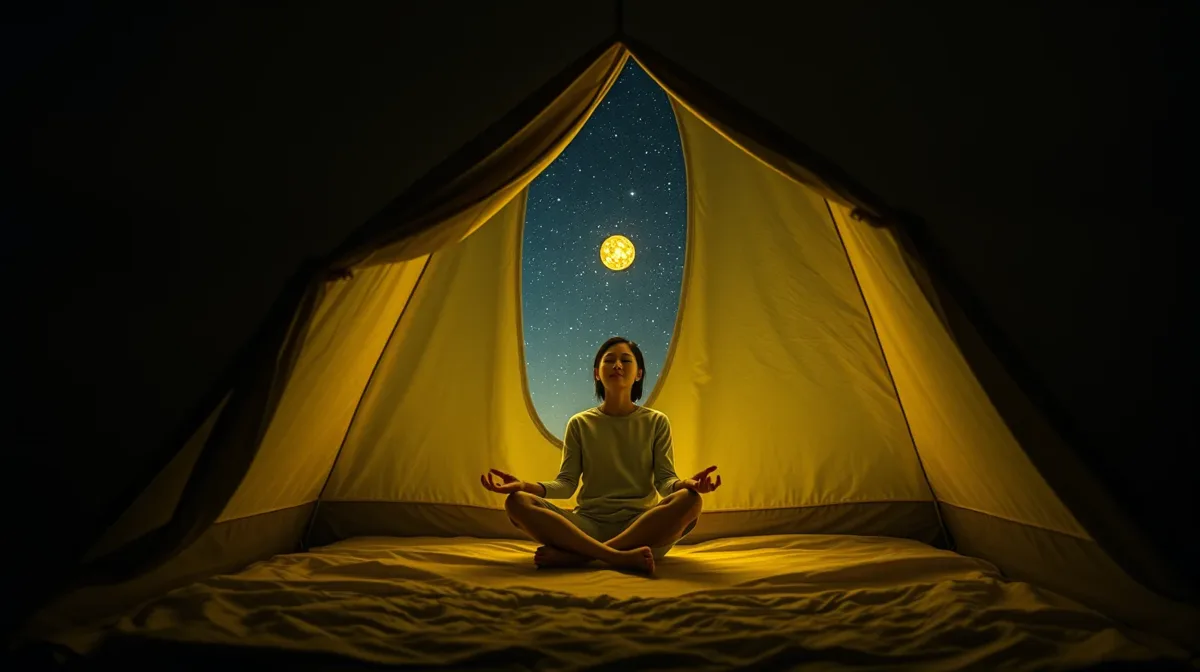
Hiding in Tent Dream: What Is This Need for Safety Really About?
Waking from a dream where you're hiding in a tent can leave you feeling secluded yet secure. If you're torn between craving solitude and fearing isolation, this dream taps into a deep human need for refuge. This guide will help you explore why it emerged and what it means for your emotional world.
Dreaming about hiding in a tent typically represents the need for safety, introspection, or retreat from external pressures. It's a sign that you're seeking psychological shelter to process emotions, avoid threats, or recharge. You might have this dream during overwhelming periods, such as social stress, work burnout, or personal crises, common among introverts or people in caregiving roles. Your subconscious is validating that withdrawal can be a healthy coping mechanism, not just escape.
Hiding in a tent in a dream means you're creating a private space for self-protection. Yet, there's another angle: while it often signals necessary boundaries, it can equally reflect avoidance of challenges. From a Jungian standpoint, this connects to the archetype of the hermit, symbolizing wisdom gained through solitude. Dream analyst Ian Wallace suggests such dreams highlight tension between safety and engagement. This duality means the dream isn't just about hiding; it's also about preparing to re-emerge, similar to hiding from threats but with a focus on internal sanctuary. It relates to barriers, but tents offer movable, temporary seclusion.
So, where is this need for hiding most pressing? In your career, are you avoiding confrontations or deadlines? In relationships, are you pulling back from intimacy or conflict? With identity, are you protecting a vulnerable part of yourself? Ask yourself: What am I hiding from, and what do I gain or lose in this tent? Reflecting on this turns the dream into a guide for balanced self-care.
Dream Analysis & Interpretation
Deeper Psychological Analysis
Myth vs Reality
Myth: Hiding in dreams means you're cowardly. Reality: It often shows intelligent self-preservation, giving you space to heal before facing the world again.
Deeper Contexts: Analytical Lenses for Your Dream About Hiding in a Tent
Jungian Analysis of Solitude
Source: Carl Gustav Jung, creator of analytical psychology
Brain's Need for Downtime
Source: Matthew Walker, sleep scientist and author of 'Why We Sleep'
What to Do Next: Boundary Test
Since your dream revealed a need for safe boundaries, this technique helps you define and test them to balance refuge with engagement.
- Map your boundaries: List areas where you feel the urge to hide (e.g., social events, work tasks). Note what feels invasive or draining in each.
- Set a small boundary: Choose one area and establish a clear, gentle limit—for example, "I will take 30 minutes alone after work" or "I won't answer emails after 7 PM."
- Communicate if needed: If others are involved, express this boundary kindly but firmly, explaining it's for self-care.
- Observe the impact: For a week, notice how this boundary affects your stress levels and interactions. Adjust as needed.
- Create a "tent ritual": Designate a physical or mental space (like a corner or visualization) as your safe zone, using it intentionally for recharge.
💡 Expert Tip:
Start with low-stakes boundaries to build confidence; this makes it easier to maintain them under pressure.
What This Builds:
This exercise develops assertiveness and self-regulation skills, crucial for healthy relationships and work-life balance.
Questions for Deeper Reflection
On a scale of 1-10, how much do you need solitude right now? What would make this need feel more balanced?
When was the last time hiding helped you solve a problem? What did you discover in that space?
If you could bring one thing into your "tent" for comfort, what would it be?
What Comes Next?
Frequently Asked Questions (FAQ)
What does hiding in a tent dream mean?
Hiding in a tent dream symbolizes the need for safety, introspection, or retreat from overwhelming situations. It often appears when you're processing emotions or seeking respite, reflecting healthy boundary-setting.
Is hiding in a tent dream a sign of social anxiety?
It can be, as it may correlate with feelings of social overwhelm, but it's not exclusively negative—it also represents self-care and the wisdom of taking time alone to recharge.
Why do I dream about hiding in tents during stressful times?
This dream commonly occurs under stress because your subconscious creates a symbolic sanctuary to help you cope with external pressures, simulating emotional protection during sleep.
How is this dream different from hiding under a blanket?
Both involve concealment, but a tent offers more structured, deliberate shelter often tied to journeys or outdoor contexts, while a blanket is more immediate, childlike comfort focused on primal safety.

Comments and User Dreams
Be the first to share your dream or opinion!