
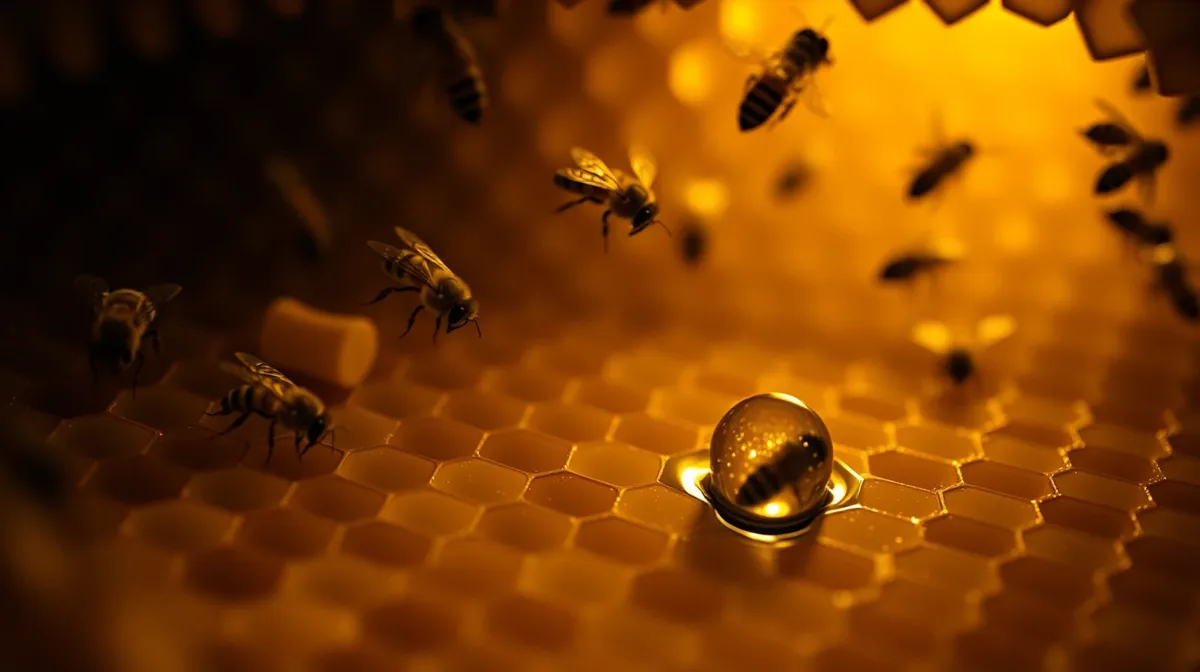
What Does It Mean When You Dream About Bees in a Beehive?
Waking from a dream focused on bees actively working inside a hive can leave you feeling intrigued or slightly overwhelmed. If you heard the steady hum, saw the organized chaos, or felt the collective energy, that buzz is your subconscious amplifying messages about teamwork and productivity. Your mind is zooming in on the mechanics of community—how individuals contribute to a whole. This guide will help you understand what those bees are up to and how it mirrors your own group engagements.
Dreaming of bees in a beehive typically means you're processing aspects of community, work, and social roles. It's a symbol of collective activity, where each bee represents a part of a system—often reflecting your job, family, or friend groups. You might wake up with a sense of busyness or curiosity about how you fit into larger structures. This dream is common during periods of high collaboration, like team projects at work, family gatherings, or community involvement, when the "hive mind" of group dynamics is prominent. As British psychologist Ian Wallace suggests, such dreams can indicate a need to assess your contributions to shared goals or to find your niche within a system.
On one level, bees in a hive represent harmony and productivity, but from a duality perspective, it might also highlight tensions or anonymity within groups. While it often signals effective teamwork—maybe you're thriving in a supportive environment—it can equally warn of losing individuality or feeling like just another worker bee. Consider this: what if the buzzing isn't about noise, but about communication, much like how inner dialogues in dreams can signal unresolved thoughts? Jungian archetypes frame this as the "collective unconscious" in action, where the hive symbolizes societal norms that you're navigating. Yet, if the bees seem aggressive or chaotic, it could point to stress in collaborative spaces, similar to overwhelming crowds.
Now, apply this symbolic activity to your daily life. In your career, are you feeling like a cog in a machine, or are you proudly contributing to team success? In relationships, do you value your role in family or friend networks, or do you crave more recognition? With your identity, how do you balance personal needs with group expectations? Ask yourself: Where in my life do I feel most like part of a hive, and is that feeling empowering or stifling? Recognizing this dynamic allows you to adjust your participation, ensuring you work with the hive, not just for it.
Dream Analysis & Interpretation
Deeper Psychological Analysis
Perspective-Shifting Question
What if the bees in your dream aren't just workers, but messengers—each one carrying a tiny piece of wisdom about how to collaborate without losing yourself?
Deeper Contexts: Analytical Lenses for Your Dream About Bees in Beehive
Neurocognitive Dream Theory
Source: G. William Domhoff, dream researcher and author of 'The Neurocognitive Theory of Dreams'
Archetypal Community Symbols
Source: Carl Gustav Jung, creator of analytical psychology
What to Do Next: Deep Reflection
Since your dream revealed a detailed view of communal activity, this technique helps you uncover hidden meanings in this everyday symbol and apply them to enhance your group interactions.
- Turn the dream into a metaphor: Ask, "If this beehive is a metaphor for my life, what system does it represent?" Jot down associations—work team, family, social circle—and note the bees" behaviors (calm, frantic, harmonious).
- Map your hive: Draw a simple diagram with you at the center and lines connecting to key groups in your life. Label each connection with one word describing your role (e.g., leader, supporter, outlier).
- Ask five deepening questions: Write answers to: What does this dream reveal about my communication in groups? Am I volunteering or assigned to my roles? Where do I feel most/least like a bee in this hive? What would happen if I changed my position? Who benefits from my contributions?
- Conduct a symbolic experiment: For one day, consciously perform a group activity—like a meeting or family dinner—while imagining yourself as a bee in a hive. Notice any shifts in your engagement or perspective.
- Synthesize insights: After the experiment, reflect on how this metaphorical view affected your real-life interactions. Did it clarify your value or highlight areas for change?
💡 Expert Tip:
This technique leverages metaphorical thinking to bypass surface-level analysis, accessing deeper subconscious patterns about your social integration.
What This Builds:
This exercise develops systems thinking and self-awareness in group dynamics. By analyzing dream symbols as metaphors for real-world systems, you build skills in strategic observation and adaptive participation—useful for leadership, teamwork, and navigating complex social environments.
Questions for Deeper Reflection
On a scale of 1-10, how integrated do you feel in your primary social or work groups? What would move you one point toward greater belonging?
What personal strengths do you bring to collaborative settings, and how could you use them more effectively?
If you could change one thing about your role in a hive-like system, what would it be, and what step could you take this week?
What Comes Next?
Frequently Asked Questions (FAQ)
What does it mean if the bees in my dream are aggressive?
Aggressive bees often symbolize conflict, stress, or feelings of threat within social or work groups. It might indicate that collaborative environments are becoming hostile, urging you to address tensions or protect your boundaries, similar to swarm dreams.
Is this dream related to hearing voices or inner thoughts?
Yes, the buzzing of bees can metaphorically relate to inner chatter or external opinions in your life. If the dream includes hearing bee-like sounds, it might reflect processing of internal or external voices, highlighting communication dynamics in groups.
How does this differ from dreaming of a swarm of bees?
A swarm focuses on uncontrolled, mobile group energy—often signaling overwhelm or sudden collective action—while bees in a hive emphasize structured, stationary community work. Swarm dreams are more about chaos, whereas the hive dream deals with organized systems.
Can this dream occur during times of loneliness?
Yes, even if you feel lonely, this dream might highlight a subconscious desire for community or reflect past experiences with groups. It can signal a need to reconnect or reassess how you engage with social systems to reduce isolation.





Comments and User Dreams
Be the first to share your dream or opinion!