
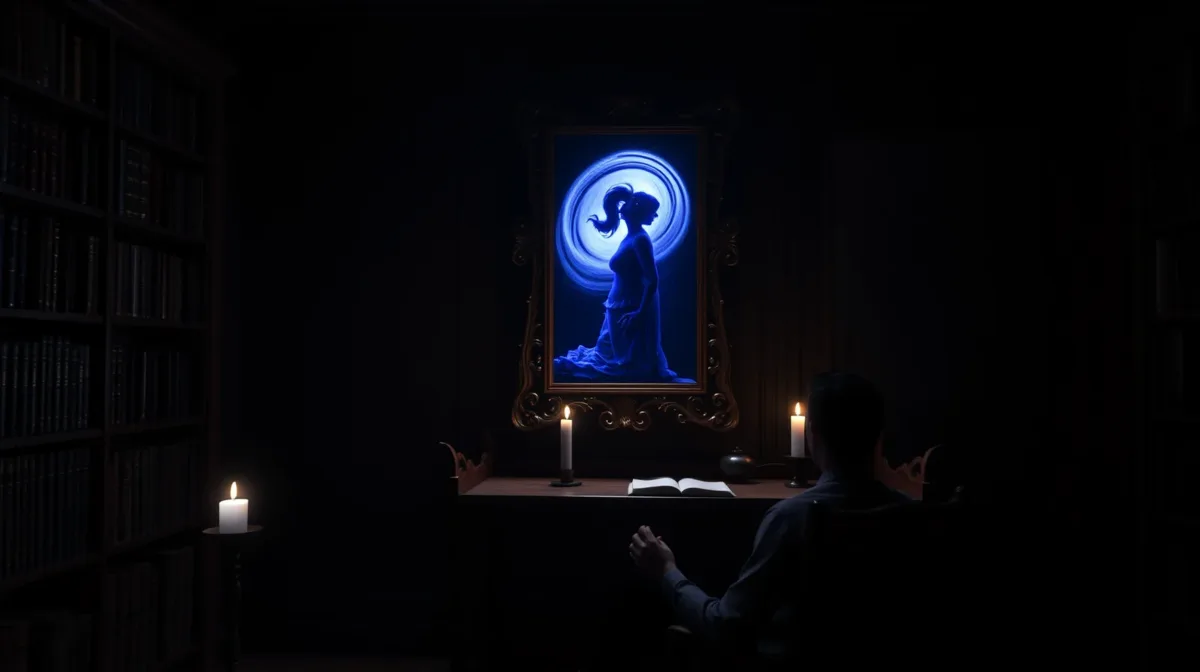
Dream About Talking to Devil: What Is This Fear Trying to Tell You?
Waking from a dream where you talked to the devil can leave you feeling unsettled, even haunted. If your heart raced with guilt or fear, you're experiencing a deep psychological signal. This guide will help you decode that message and understand why your subconscious staged this dramatic encounter.
Dreams about conversing with the devil often point to internal conflicts over morality, guilt, or repressed desires. You might feel shaken because this symbol taps into fundamental fears about right and wrong. It commonly emerges during life phases where you're facing ethical dilemmas, feeling tempted, or wrestling with parts of yourself you've denied.
On a deeper level, this dream isn't about literal evil but about your shadow self—the aspects you hide or reject. As Carl Jung explained, the devil archetype represents denied impulses and moral ambivalence. Engaging in dialogue suggests your mind is ready to confront these elements rather than avoid them. This mirrors the broader theme of devil dreams, where the figure acts as a catalyst for self-examination.
Consider where in your waking life you feel torn between desires and duties. Are you navigating a career choice with ethical gray areas? Or struggling with personal boundaries in a relationship? This dream highlights spots where your inner compass feels tested, urging you to reclaim agency over your choices.
Dream Analysis & Interpretation
Deeper Psychological Analysis
This dream functions as a psychological mirror, reflecting your inner moral landscape. The act of talking indicates an ongoing internal dialogue about values, guilt, or hidden urges. Your subconscious uses this vivid symbol to make abstract conflicts tangible, forcing you to engage with aspects you might otherwise ignore.
Perspective-Shifting Question
What if the devil in your dream isn't an external tempter, but a disowned part of yourself begging for integration?
Deeper Contexts: Analytical Lenses for Your Dream About Talking to Devil
Jungian Shadow Integration
Source: Carl Gustav Jung, founder of analytical psychology
Jung viewed the devil as a key archetype of the shadow—the part of the psyche containing repressed traits. Dialogue with this figure in dreams suggests active engagement with the shadow, a necessary step for psychological wholeness. This process aligns with inner work techniques like active imagination, where you consciously interact with dream figures for insight.
Cultural Symbolism of Temptation
Source: Various Traditions, cross-cultural mythologies
Across cultures, from Christian theology to folklore, the devil symbolizes temptation, free will, and moral testing. In dreams, this often translates to personal struggles with integrity or societal pressures. Understanding this context helps frame the dream not as a supernatural event, but as a metaphor for human ethical dilemmas.
What to Do Next: Dialogue with Shadow
Since your dream revealed a confrontation with your shadow, use this technique to transform fear into understanding by engaging with that inner figure.
- Set the scene: Find a quiet space and recall the dream devil. Imagine it sitting across from you, not as a threat, but as a messenger.
- Ask open questions: Journal a conversation. Start with, "What part of me do you represent?" Listen for intuitive answers without judgment.
- Identify the gift: Often, the shadow holds repressed strengths. Ask, "What quality are you trying to bring to my awareness?"
- Integrate the insight: Choose one small action to acknowledge this quality in waking life, like setting a boundary or expressing a hidden opinion.
💡 Expert Tip:
This works because it externalizes inner conflict, making it manageable and reducing the anxiety associated with repressed elements.
What This Builds:
This exercise builds emotional regulation by teaching you to face and integrate difficult aspects of yourself, a skill crucial for resilience in high-stress personal or professional situations.
Questions for Deeper Reflection
On a scale of 1-10, how present is this feeling of moral conflict in your daily life? What would need to happen to reduce it by one point?
When was the last time you felt completely at peace with a difficult decision? What made that different?
If this dream's anxiety vanished tomorrow, what would be the first small sign of change you'd notice?
What Comes Next?
As you process this dream, watch for follow-up symbols. If integration progresses, you might dream of speaking to a divine figure signaling resolution. If resistance persists, recurring scenarios of betrayal could indicate ongoing moral conflicts. Your subconscious will keep reflecting this inner work until balance is found.
Frequently Asked Questions (FAQ)
What does it mean spiritually to dream about talking to the devil?
Spiritually, this dream often symbolizes a test of faith or confrontation with temptation, reflecting inner moral struggles rather than literal evil. It encourages self-examination and integrity checks.
Why do I keep having dreams about conversing with the devil?
Recurring dreams like this typically point to unresolved ethical dilemmas or repressed guilt in waking life. Your subconscious repeats the symbol until you address the underlying conflict, such as in communication issues or financial ethics.
Is talking to the devil in a dream a bad omen?
No, it's not a prediction of doom. Psychologically, it's a compensatory mechanism highlighting areas where you need to reclaim personal power or confront denied desires, similar to patterns in dreams of taboo encounters.
How is this dream different from talking to a demon?
While both involve dark figures, demons often symbolize specific fears or obsessions, whereas the devil archetype represents broader moral ambivalence and shadow integration. Explore demon dialogue dreams for nuanced differences.


Comments and User Dreams
Be the first to share your dream or opinion!