
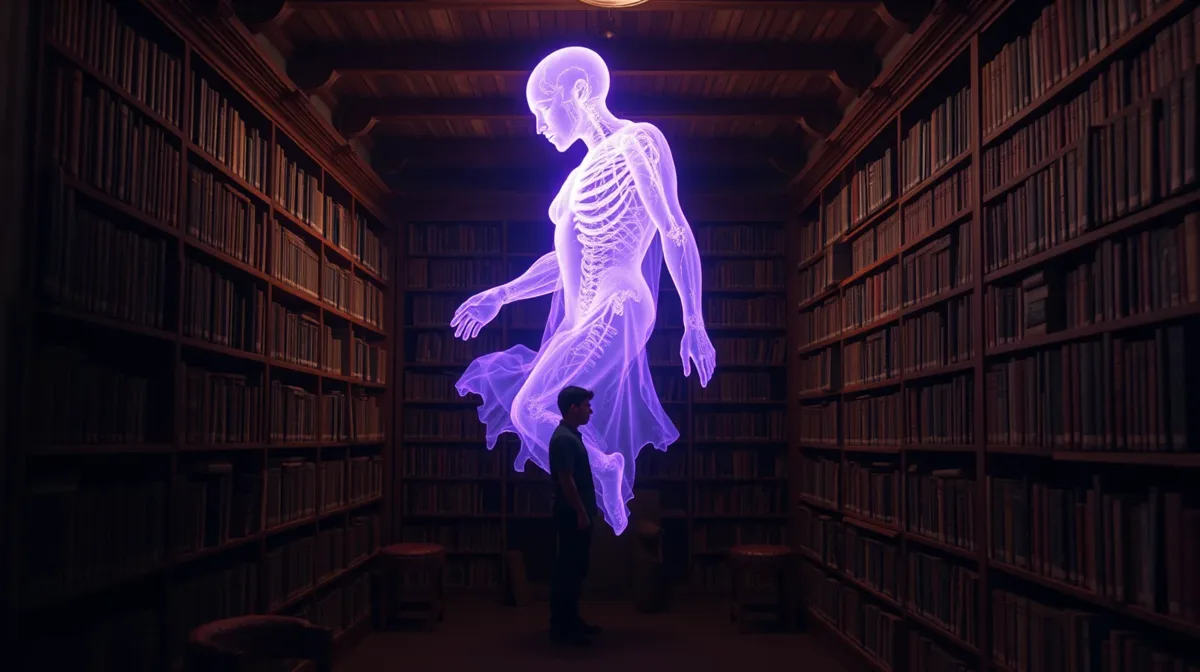
What Does It Mean When You Dream About a Ghost?
Waking from a ghost dream can leave you in a cold sweat, heart racing as if you've glimpsed the other side. Or perhaps it's a quieter unease—a lingering sense that something from your past has brushed against your present. Whether filled with terror or a strange curiosity, these emotions are valid and deeply human. Ghosts in dreams tap into our primal fears of the unknown, the unresolved, and what might be hiding in the shadows of our minds. If you're here seeking answers after such an experience, know that you're part of a vast community trying to decipher these nocturnal messages.
To understand ghost dreams, we need to see them through two lenses: the archetypal and the personal echo. Archetypally, a ghost represents the unresolved—memories, regrets, emotions that haven't found peace. In the framework of Carl Jung, it often mirrors the shadow self, those parts of your psyche you've rejected or ignored, waiting to be integrated for wholeness. Culturally, ghosts have haunted human consciousness for millennia. From the ancestral spirits in African traditions to the vengeful ghosts in Greek mythology, they reflect our ongoing struggle with death, memory, and justice. In modern psychology, dream analyst Lauri Loewenberg notes that ghost dreams frequently surge during life transitions—breakups, career changes, grief—when old wounds resurface. Your subconscious uses this symbol as a multifaceted tool: it might be a warning to address neglected issues before they escalate, a compensation for feelings of invisibility or disconnection in waking life, or an integration signal urging you to make peace with your history.
The specific details of your dream hold the key to its meaning. For instance, if you were seeing a ghost, it often points to an unresolved issue knocking at your door, demanding attention. Talking to a ghost suggests an internal dialogue or a need to process grief. An evil spirit might externalize deep-seated fears or negative thought patterns, while a friendly ghost could offer guidance or comfort from your past. When the ghost is a loved one, it's typically about processing loss, seeking closure, or honoring bonds. Dreams of being a ghost reveal feelings of invisibility or disconnection, as if you're floating through life without presence. Fighting a ghost or running from a ghost highlight avoidance patterns—battling or fleeing from issues that feel intangible yet persistent. Location adds another layer: a ghost in your house invades your personal space, hinting at family tensions or self-invasion, whereas a ghost graveyard ties to legacy, ancestry, or the weight of the past.
From a neuroscientific perspective, Matthew Walker's research shows that REM sleep, where vivid dreams like these occur, acts as overnight therapy, helping regulate emotions. So, a ghost dream might be your brain's way of metabolizing fear, grief, or anxiety from your daily life. This isn't dysfunction—it's a natural healing mechanism. Historically, ghosts have served as bridges between worlds. In literature, from Shakespeare's Hamlet to Toni Morrison's Beloved, they demand justice or connection, mirroring how our dreams might urge us to rectify wrongs or reconnect with lost parts of ourselves.
This interpretation guide isn't about supernatural predictions; it's a psychological diagnostic designed to decode the signals from your subconscious. By exploring the specific variants of your ghost dream below, you can determine whether it was an archetypal nudge from the collective unconscious, a personal echo of unprocessed emotions, or a call for internal change and growth. Your ghost isn't just a phantom to fear—it's a map to what needs light, attention, and perhaps, reconciliation in your life. Use this resource to move from the haunting uncertainty of the night to the clarity of insight, transforming spectral whispers into steps toward healing and empowerment.
Discover the full meaning of your dream
What was the ghost's demeanor?
How did you interact with the ghost?
Dream About Talking to a Ghost
Check this if you had a conversation with the ghost.
Dream About Fighting a Ghost
Read this for dreams involving conflict with a ghost.
Dream About Running From a Ghost
See this if you were fleeing from the ghost in fear.
What was the context or identity of the ghost?
Dream About Ghost of a Loved One
Explore this if the ghost was someone you knew who passed away.
Dream About a Ghost in Your House
Read this for ghosts appearing in your home environment.
Dream About Ghosts in a Graveyard
See this for dreams set in a cemetery with ghosts.
Dream About Being a Ghost
Check this if you dreamed of being a ghost yourself.
Frequently Asked Questions (FAQ)
What does it mean to dream about a ghost?
Dreaming about a ghost typically symbolizes unresolved issues from your past, such as regrets, unprocessed emotions, or hidden fears. It often serves as a psychological mirror, reflecting parts of yourself you've ignored. The meaning can vary based on context—explore specific variants like seeing a ghost for deeper insight.
Is dreaming about a ghost a bad omen?
Not necessarily. While ghost dreams can feel scary, they're rarely predictive of future events. Instead, they're usually your subconscious processing anxiety, grief, or change. Psychologists view them as tools for emotional regulation, not supernatural warnings.
Why do I keep having ghost dreams?
Recurring ghost dreams often indicate persistent unresolved issues in your life, such as ongoing stress, unaddressed trauma, or avoidance of important decisions. They might spike during transitions like job changes or relationship endings, urging you to confront what's haunting you.
What is the spiritual meaning of a ghost dream?
Spiritually, ghost dreams can represent connections to ancestors, unfinished karmic business, or messages from the unconscious realm. In many traditions, they're seen as guides rather than threats, offering wisdom for personal growth and healing.
Do ghost dreams relate to past lives?
Some spiritual interpretations link ghost dreams to past-life memories or ancestral echoes, but psychological perspectives focus more on current life issues. Unless you have strong beliefs in reincarnation, it's often more helpful to explore present emotional resonances.
How can I stop recurring ghost dreams?
To reduce recurring ghost dreams, try addressing the underlying issues—journal about past events, practice relaxation techniques, or seek therapy if needed. Actionable steps like confronting symbolic fears in dreams can translate to real-world problem-solving.
Are ghost dreams common during grief?
Yes, ghost dreams are very common during grief, especially involving deceased loved ones. They help process loss by allowing symbolic interaction, which can facilitate closure and emotional integration over time.
What's the difference between a ghost and a spirit in dreams?
In dream analysis, "ghost" often implies unresolved or haunting elements, while "spirit" might suggest guidance or higher consciousness. However, the distinction is fluid; context matters most. Focus on the emotion and narrative to decode your specific message.
Share your dream or opinion
Other variations of this dream
Dream About Ghost of a Loved One
The ghost of a loved one in a dream often symbolizes unfinished emotional business, memories, or a need for closure. It's natural to feel a mix of emotions; this dream helps integrate loss or celebrate...
Dream About Invisibility
Dreams about invisibility can leave you feeling hollow, as if your very existence is being questioned. That creeping sense of being overlooked, undervalued, or powerless upon waking is a common human...
Dream About a Coffin
Waking from a dream about a coffin can leave you with a heavy feeling, a mix of fear and curiosity that clings to your morning. If you felt a chill or anxiety upon remembering, you're not alone. This...
Dream About Demons
Waking from a dream about demons can leave you feeling terrified, invaded, or deeply unsettled. If your heart was racing, and you felt a chill of fear, that's a natural response to a symbol that taps...
Dream About the Past
Dreaming about the past typically symbolizes unresolved emotions, learning from experience, or a desire to reconnect with lost aspects of yourself. You might wake feeling reflective or sad, and that's...
Dream About Death
Dreams about death can leave you feeling shaken, vulnerable, or deeply contemplative. If you woke from such a dream with your heart racing or a sense of unease, you're experiencing a common human response...
Comments and User Dreams
Be the first to share your dream or opinion!