
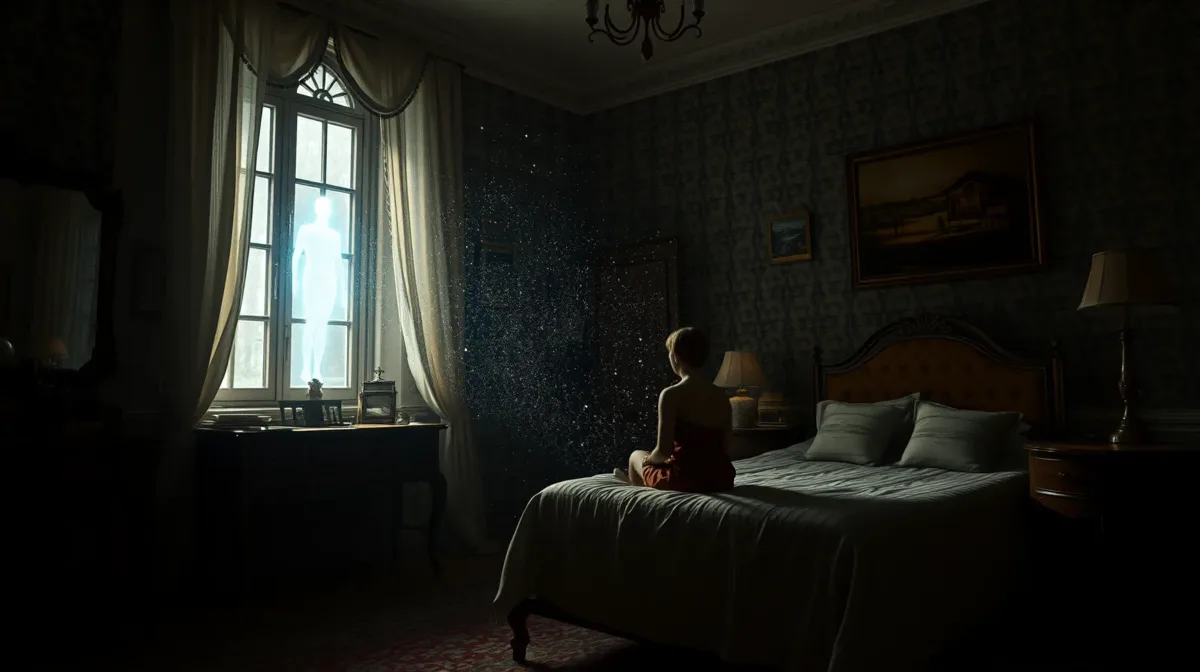
Dream About Seeing a Ghost: What Is This Fear Trying to Tell You?
Waking from a ghost sighting can leave you chilled and uneasy, heart racing in the dark. If you felt a presence that shouldn't be there, your subconscious is signaling something important. This guide will help you decode that message and understand why it appeared now.
Seeing a ghost in a dream often represents an unresolved issue from your past—a memory, regret, or unprocessed emotion that haunts your present. It's natural to feel shaken; this dream taps into deep-seated anxieties about things left unfinished. Typically, it emerges during times of transition or stress, when old wounds resurface.
From a psychological angle, the ghost might not be a threat but a messenger. Jungian theory suggests it could symbolize the shadow self, an aspect of your personality you've rejected or ignored. This connects to the broader exploration of ghost dreams, where such figures serve as mirrors for hidden truths. Alternatively, it might reflect feelings of being watched or judged, similar to dreams about being observed.
Where in your life do you feel haunted? Perhaps in relationships where old patterns repeat, or career choices shadowed by past failures. Ask yourself: What from my history am I avoiding? Awareness of this can shift the energy from fear to insight, giving you agency over unresolved matters.
Dream Analysis & Interpretation
Deeper Psychological Analysis
Dreams of ghosts act as internal mirrors, reflecting parts of yourself or your history that you haven't fully acknowledged. They highlight emotional residues that need attention, turning abstract fears into tangible symbols for processing.
Perspective-Shifting Question
What if the ghost isn't chasing you away, but trying to deliver a message you've been avoiding?
Deeper Contexts: Analytical Lenses for Your Dream About Seeing a Ghost
Jungian Archetypes and the Unconscious
Source: Carl Gustav Jung, founder of analytical psychology
Jung viewed ghosts as manifestations of the collective unconscious or personal shadow. They represent repressed emotions or archetypal forces seeking integration. By confronting them in dreams, you engage in a process of individuation—becoming more whole. For deeper insight, explore Jung's archetypes in dreams.
REM Sleep and Emotional Processing
Source: Matthew Walker, sleep scientist and author of 'Why We Sleep'
Matthew Walker's research shows that REM sleep helps process emotional experiences. Anxiety dreams like seeing ghosts often occur during high-stress periods, as your brain attempts to regulate fear through vivid symbolism. This isn't dysfunction—it's a natural healing mechanism.
What to Do Next: Safety Anchor
Since your dream revealed unresolved fears, this technique helps ground you by creating a mental safe space.
- Identify your anchor: Think of a real place, object, or person that makes you feel completely safe and calm.
- Visualize in detail: Close your eyes and imagine this anchor vividly—its sights, sounds, and sensations.
- Connect to the dream: Next time you recall the ghost, immediately shift to visualizing your anchor. Hold this image for 60 seconds.
- Practice daily: Spend 2 minutes each morning reinforcing this anchor, so it becomes an automatic response to anxiety.
💡 Expert Tip:
Pair this with deep breathing to enhance the calming effect, as it engages the parasympathetic nervous system.
What This Builds:
This exercise builds emotional regulation skills, training your brain to shift from fear to safety—a tool useful for managing stress in work, relationships, and personal challenges.
Questions for Deeper Reflection
On a scale of 1-10, how present is this feeling of being haunted in your daily life? What would need to happen to reduce it by one point?
When was the last time you felt completely at peace with a past event? What was different then?
If this ghost could speak, what one question would you ask it?
What Comes Next?
If you integrate this insight, you might dream of a comforting presence symbolizing resolution. If resistance continues, watch for dreams about being chased, indicating persistent avoidance. Pay attention to waking-life synchronicities, like unexpected memories or conversations about the past.
Frequently Asked Questions (FAQ)
What does it mean to dream about seeing a ghost?
Dreaming about seeing a ghost typically symbolizes unresolved issues from your past, such as regrets, unprocessed emotions, or hidden fears. It often emerges during stressful transitions when your subconscious processes lingering anxieties.
Is dreaming about a ghost a bad omen?
No, it's rarely a literal prediction. Psychologically, it signals emotional processing—not bad luck. Focus on what the ghost represents in your life, like unfinished business or shadow aspects needing integration.
Why do I keep dreaming about ghosts?
Recurring ghost dreams suggest persistent unresolved matters. They may relate to ongoing stress, grief, or identity shifts. Analyzing patterns, such as similarities to dark figures, can reveal deeper themes.
What is the spiritual meaning of seeing a ghost in a dream?
Spiritually, it can indicate messages from the subconscious or connections to ancestral energies. In some traditions, it represents guidance or warnings, but always consider your personal context first.






Comments and User Dreams
Be the first to share your dream or opinion!