

Hospital Waiting Room Dream: How to Escape the Agony of Anticipation
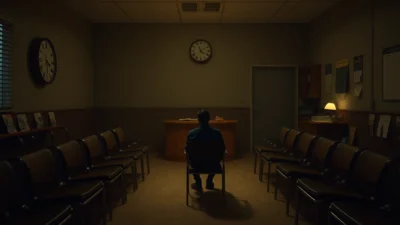
The suspended animation of a hospital waiting room dream is its own special torture. You're stuck with your anxiety, watching the clock, surrounded by the silent stress of others. It's a dream of agonizing anticipation, where the fear of bad news can be worse than the news itself. If you woke feeling drained by this passive worry, your subconscious is pointing to where you feel stuck in limbo in your waking life.
Dreaming of being in a hospital waiting room symbolizes a period of stressful anticipation and powerlessness in the face of an impending outcome or decision that is out of your hands. You're waiting for a verdict, a result, a diagnosis—something that will significantly impact your life. The key emotion here is not active fear, but a grinding, passive anxiety. This dream emerges when you've done all you can (or feel you can) in a situation, and now you're at the mercy of external forces: waiting for test results, a job offer, a legal judgment, or someone else's decision about your future. It reflects the modern agony of being informed enough to worry, but not empowered enough to act.
This context explores a specific, common facet of the anxiety found in hospital dreams—the purgatory before the revelation. Psychologically, the waiting room represents a state of projected anxiety; you're taking your internal worry and locating it in this external, institutional space. The other anxious people in the dream often mirror aspects of your own worry, magnifying it. This experience of suspended time is closely related to dreams about waiting interminably or being late, where time itself becomes the enemy. The sterile, impersonal environment underscores the feeling that your fate is being processed by an uncaring system.
The dream asks a pointed question: What important outcome are you powerless to hurry up, and why does the waiting feel so dangerous? Is it a creative project submitted for judgment? A relationship hanging in the balance after a difficult conversation? A financial decision pending approval? The dream highlights your intolerance for uncertainty and the stories of catastrophe you're writing while you wait. The way out isn't to get the news faster, but to change your relationship with the waiting itself.
Dream Analysis & Interpretation
Deeper Psychological Analysis
This dream is your mind's simulation of uncertainty tolerance. It's placing you in a controlled environment (the waiting room) where the only variable is time, to see how you handle the stress of not knowing. The dream isn't about the outcome; it's a stress test for your ability to manage anticipatory anxiety. It reveals how much of your mental energy is consumed by "what if" scenarios before any real event occurs.
Creative Spark
What if this waiting room isn't a prison of anxiety, but a blank stage? The empty chairs are an invitation to rehearse for every possible outcome, so you're prepared, not paralyzed, when the door finally opens.
Deeper Contexts: Analytical Lenses for Your Dream About Waiting
Anticipatory Anxiety and the Unknown
Source: Layne Dalfen, dream analyst and author
Dream analyst Layne Dalfen suggests that waiting room dreams are classic manifestations of anticipatory anxiety. The mind fixates on a future event it cannot control and creates a symbolic holding pattern. The dream often appears when people are "waiting for the other shoe to drop" in a tense life situation, and it exaggerates the helplessness to prompt a shift from passive worry to active mental preparation.
The Existential Wait
Source: Albert Camus, philosopher of the absurd
Camus's concept of life's inherent absurdity and waiting (as in "Waiting for Godot") resonates here. The hospital waiting room can be seen as a metaphor for the human condition of waiting for meaning, answers, or resolution in an indifferent universe. The dream confronts you with the discomfort of that existential wait on a personal scale.
What to Do Next: The Anticipation Alchemist
Since the dream traps you in passive waiting, this technique helps you transform that stagnant anxiety into productive energy by focusing on what you can control: your preparation.
- Name the Wait: Write down: "I am waiting for ______." Acknowledge it fully. Then write: "While I wait, I have no control over ______."
- Rehearse the Scenes: Set a timer for 15 minutes. Imagine three specific outcomes: the best-case, the worst-case (but realistic), and the most likely. For each, write down your first practical response. Not your feeling, but your action (e.g., "If I get the job, I will call my mentor. If I don't, I will update my resume.")
- Build Your "Waiting Kit": Create a physical or digital folder. Fill it with resources, quotes, playlists, or plans that would help you in ANY of the scenarios above. This kit is for your resilience, not the outcome.
- Control the Clock: Instead of watching time pass, schedule "worry windows." Give yourself 10 minutes twice a day to actively think about the pending issue. Outside those windows, when anxiety pops up, tell it: "Not now. See you at 5 PM."
- Anchor in the Present: Choose a simple, sensory activity (making tea, feeling the texture of your desk, listening to one song) and perform it with full attention whenever you feel sucked into the waiting room anxiety. This grounds you in the now.
💡 Expert Tip:
The "worry window" technique works because it contains the anxiety, giving it a place to exist without letting it consume your entire day. It turns a passive state into a scheduled, finite activity.
What This Builds:
This practice builds emotional regulation and strategic foresight. It trains you to tolerate uncertainty, plan for multiple contingencies, and maintain operational effectiveness during periods of delay—skills essential for project management, investing, leadership, and navigating any high-stakes personal transition.
Questions for Deeper Reflection
On a scale of 1-10, how much mental energy are you spending on worrying about this pending outcome? What could you do with that energy if you reclaimed just 20% of it?
If the door to the doctor's office finally opened, what is the best possible news you could hear? Now, what is the most manageable version of the worst news?
What is one small, meaningful action you can take today that is entirely within your control, unrelated to the outcome you're waiting for?
What Comes Next?
As you master the art of waiting, you might dream of doors opening, receiving clear information, or being in a peaceful library instead of a sterile waiting room. If the anxiety remains unchecked, the next dream might involve formal endings or escalating health fears, representing the catastrophic stories winning.
Frequently Asked Questions (FAQ)
What does it mean to dream about a hospital waiting room?
It symbolizes a period of stressful anticipation and helplessness in your waking life. You're waiting for an important outcome, decision, or piece of news that is beyond your immediate control, leading to feelings of anxiety, impatience, and powerless delay.
Why is there always a clock in these dreams, and why does time slow down?
The exaggerated clock and distorted time represent your heightened focus on the passage of time and your impatience. Time feels slow because your anxiety makes you hyper-aware of every moment spent in uncertainty, magnifying the subjective experience of waiting.
Does this dream mean I'm avoiding a decision?
Often, yes, but indirectly. It usually means you're waiting for an external force to make a decision for you or to provide information you feel you need before you can act. The dream highlights the discomfort of this passive, dependent position.
Is this a common dream before medical test results?
Extremely common. It's the literal manifestation of the anxiety surrounding diagnostic limbo. The dream gives a visual and emotional form to the very real psychological experience of waiting for a health verdict.





Comments and User Dreams
Be the first to share your dream or opinion!