
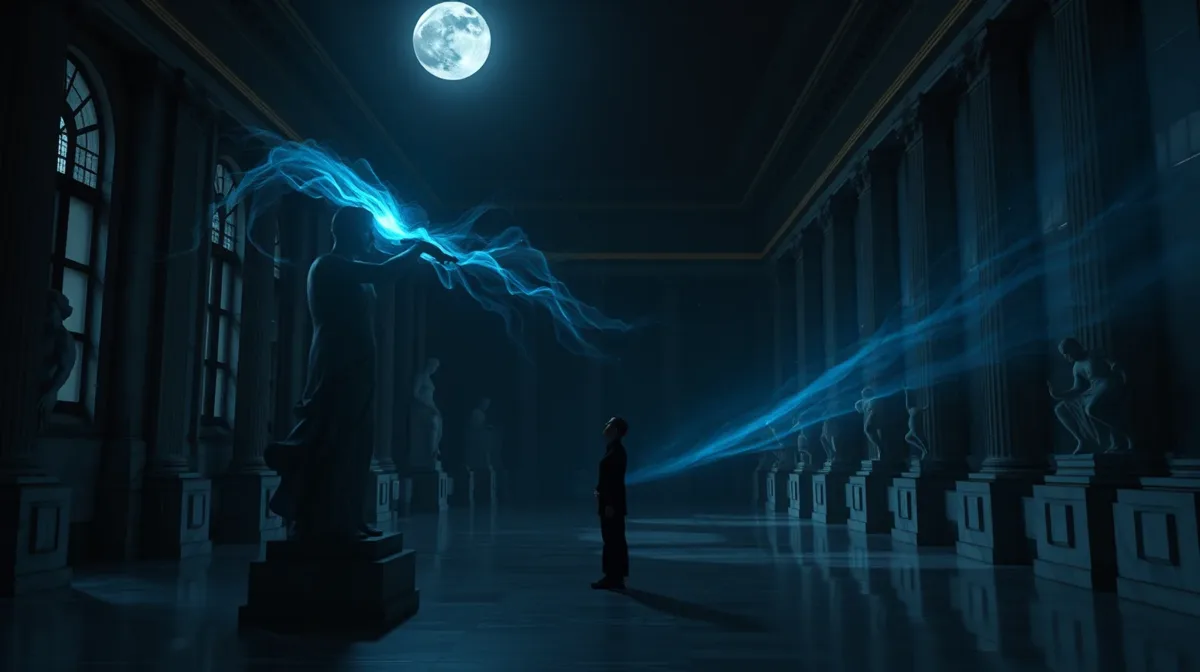
Moving Statue Dream: How to Understand This Startling Nightmare
Waking from a dream where a statue comes to life can be jarring. Your heart might race as the stone figure moves against all logic, leaving you with a mix of fear and fascination. If you felt startled or intrigued, you're experiencing a common signal from your subconscious: something rigid in your life is beginning to shift. This guide will help you decode why your mind animated the inanimate and what it means for your waking world.
A moving statue in a dream typically represents the awakening of something that has been rigid, suppressed, or dormant in your life. It's a signal that aspects you've kept static—whether beliefs, emotions, or relationships—are demanding movement and attention. This dream often emerges during periods when change is resisted but necessary, such as career transitions or personal growth phases. You might feel anxious or excited, and that's normal; your psyche is highlighting a frozen part of you that's ready to thaw.
From a different angle, this movement can have a duality: while it might feel threatening, like a zombie rising from stillness, it could also symbolize liberation and growth. Jungian theory suggests that such dreams invite integration of the shadow—the rejected parts of yourself—forcing you to confront what you've kept immobilized. British psychologist Ian Wallace notes that moving statue dreams often occur when people are on the verge of breaking free from limiting patterns, offering a chance to embrace flexibility rather than fear.
In your daily life, where does this rigidity show up? In your career, are you stuck in outdated methods that need updating? In relationships, is there a communication style that feels too fixed? By asking yourself where you feel "stone-like," you can pinpoint areas ripe for transformation. This awareness is the first step toward reclaiming agency over change, turning a startling dream into a catalyst for proactive adjustment.
Dream Analysis & Interpretation
Deeper Psychological Analysis
Perspective-Shifting Question
What if the moving statue isn't a monster to flee, but a guide trying to hand you back a forgotten part of yourself?
Deeper Contexts: Analytical Lenses for Your Dream About a Moving Statue
Jungian Perspective on Animation
Source: Carl Gustav Jung, founder of analytical psychology
Neuroscience of Threat Simulation
Source: Matthew Walker, sleep scientist and author of 'Why We Sleep'
What to Do Next: Rewriting the Dream's Ending
Since your dream revealed a rigid aspect coming to life, use this empowerment technique to transform anxiety into agency by creatively altering the narrative.
- Recreate the scene: Sit comfortably and recall the dream—where were you, and what did the moving statue do? Note the emotions without judgment.
- Pause time: Imagine freezing the dream at the moment the statue started moving. Visualize everything motionless, giving you control.
- Change the script: What if, instead of fear, you felt curiosity? Picture yourself approaching the statue calmly, asking what it wants to show you.
- Find an ally: Introduce a supportive element—maybe a tool, a person, or a light—that helps you interact with the statue positively.
- End from power: Visualize a new conclusion where you and the statue reach an understanding, symbolizing integration of the rigid part.
💡 Expert Tip:
If the dream repeats, you might become lucid mid-dream and consciously choose this new response, building neural pathways for calm assertiveness.
What This Builds:
This exercise develops emotional regulation and creative problem-solving skills. By "practicing" courage in imagination, you enhance real-world resilience when facing rigid situations at work or in relationships.
Questions for Deeper Reflection
On a scale of 1-10, how present is this feeling of rigidity in your life? What would need to happen to reduce it by one point?
When was the last time you felt completely fluid and adaptable in a challenging situation? What made that possible?
If this moving statue could speak, what one sentence would it say to you about what needs to change?
What Comes Next?
Frequently Asked Questions (FAQ)
What does a moving statue dream mean spiritually?
Spiritually, a moving statue can symbolize awakening divine guidance, ancestral messages, or thawing spiritual potential. It might signal that a long-held belief is evolving, inviting you to embrace dynamic faith rather than static dogma.
Is a moving statue dream a bad omen?
No, it's not an omen—it's a psychological signal. While it can feel alarming, it often indicates necessary growth. The movement reflects internal shifts, not external danger, so focus on what rigidity in your life needs attention.
Why do I dream of statues moving during stress?
Stress amplifies feelings of rigidity, making moving statue dreams more common. Your subconscious uses the symbol to process anxiety about change, helping you confront inflexible patterns under pressure.
How is a moving statue different from a ghost dream?
A moving statue emphasizes awakening rigidity, while a ghost dream often deals with unresolved past or memory. Both can be unsettling, but statues focus on structural change, ghosts on emotional echoes.

Comments and User Dreams
Be the first to share your dream or opinion!