
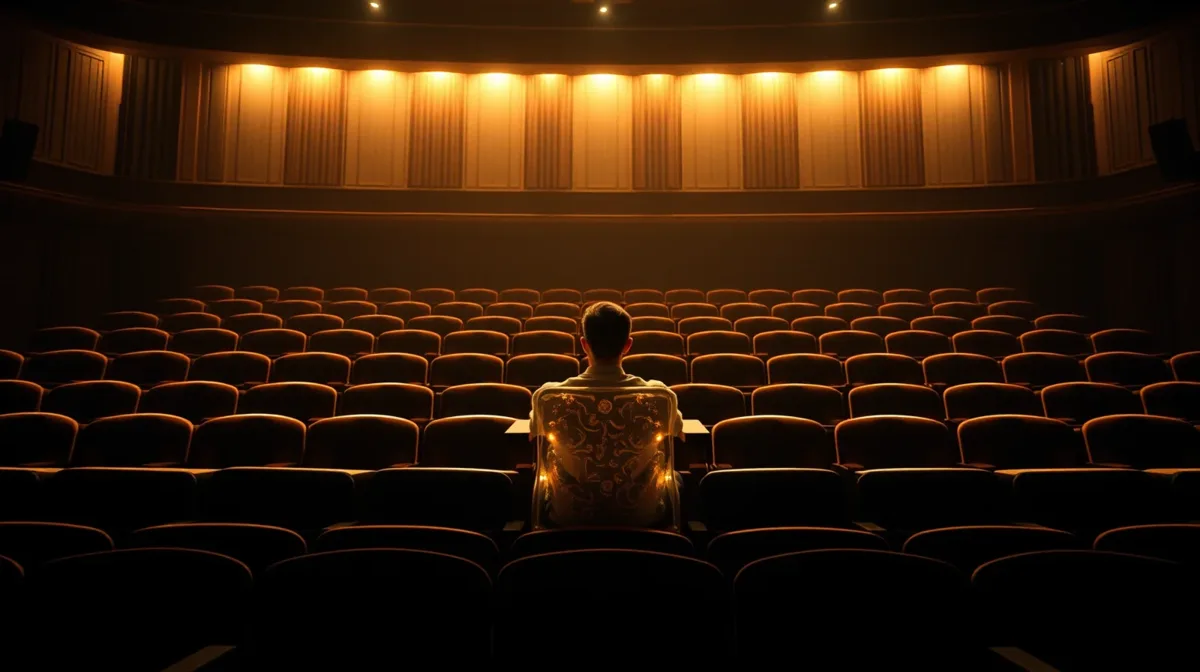
Why Do You Keep Dreaming About Theater Audiences? (And What to Do About It)
Dreams where you're part of a theater audience can leave you feeling passive or critically observant. If you woke up analyzing the performance or feeling disconnected, your mind is processing themes of judgment, participation, and perspective. Let's interpret this silent role.
Dreaming about a theater audience typically represents your position as an observer in waking life, highlighting feelings of detachment, judgment, or the desire to engage more actively. It's common to feel neutral or slightly anxious after such a dream, as it often emerges when you're in situations where you're watching rather than doing, such as during conflicts or decisions made by others.
This context is an integral part of theater dreams, focusing on the spectator archetype. Psychologically, the audience symbolizes your critical self or external pressures, similar to how dreams of watching movies reflect passive consumption. Dream analyst Ian Wallace suggests that audience dreams can signal a need to shift from observation to action in areas where you feel sidelined.
In your daily life, ask yourself: Where are you playing the audience member instead of the actor? This might be in work projects, family dynamics, or personal goals. The dream isn't criticizing observation; it's pointing out opportunities to step onto your own stage. By recognizing this, you can choose when to watch and when to participate more fully.
Dream Analysis & Interpretation
Deeper Psychological Analysis
Creative Spark
What if this dream isn't about passivity, but about gathering the perfect audience for when you're ready to perform your own masterpiece?
Deeper Contexts: Analytical Lenses for Your Dream About Audience Theater
The Observer Self in Mindfulness
Source: Jon Kabat-Zinn, founder of Mindfulness-Based Stress Reduction
The Spectator in Existentialism
Source: Jean-Paul Sartre, existentialist philosopher
What to Do Next: 'If This is a Metaphor' Technique
Since your dream highlighted observation roles, this technique helps you uncover hidden messages in everyday passivity.
- Turn the dream into a question: Instead of "I dreamed I was in an audience," ask "What in my life am I watching instead of doing?"
- Find the analogy: Map dream elements to life—e.g., the performance equals a situation, your seat equals your perspective, applause equals approval sought.
- 5 Deepening Questions: Journal answers: What am I avoiding by watching? Who is performing that I could emulate? What would happen if I stood up and joined? What judgment am I holding? What do I learn from this view?
- Symbolic action: Choose one real-life scenario where you're passive and do one small thing to engage, like asking a question in a meeting or initiating a conversation.
- Reflect on shifts: Notice how this changes your feelings of connection or agency over the next few days.
💡 Expert Tip:
This works because neutral dreams often mask important insights; treating them as metaphors unlocks deeper self-awareness.
What This Builds:
This develops metaphorical thinking and proactive engagement skills, valuable for strategic decision-making and personal growth, by training you to translate observation into actionable insight.
Questions for Deeper Reflection
On a scale of 1-10, how often do you feel like an observer rather than a participant in your life? What would need to happen to shift that balance toward more participation?
If you could give feedback to the "performance" in your dream, what would you say, and how might that apply to a real-life situation?
When was the last time you switched from watching to taking action in a meaningful way? What triggered that change?
What Comes Next?
Frequently Asked Questions (FAQ)
What does it mean to dream about a theater audience?
It symbolizes your role as an observer in life, reflecting feelings of detachment, judgment, or a desire to engage more actively. It often appears when you're watching situations unfold rather than participating in them.
Is being in an audience dream a sign of loneliness?
It can indicate feelings of isolation or disconnection, but not always. More commonly, it highlights a psychological stance of observation, which might be protective or a signal to increase involvement in social or personal matters.
Why do I dream about specific audience reactions, like laughter or silence?
Specific reactions mirror your internal judgments or external social pressures. For example, laughter might reflect fear of ridicule, while silence could indicate unmet needs for acknowledgment or approval in waking life.
How can I become more active after an audience dream?
Start by identifying one area where you feel passive and take a small step to participate, such as voicing an opinion or joining an activity. Reflection on what you're observing can also clarify when action is needed.



Comments and User Dreams
Be the first to share your dream or opinion!