
Thumb War Dream Meaning: Unlock the Power of Play in Your Relationships
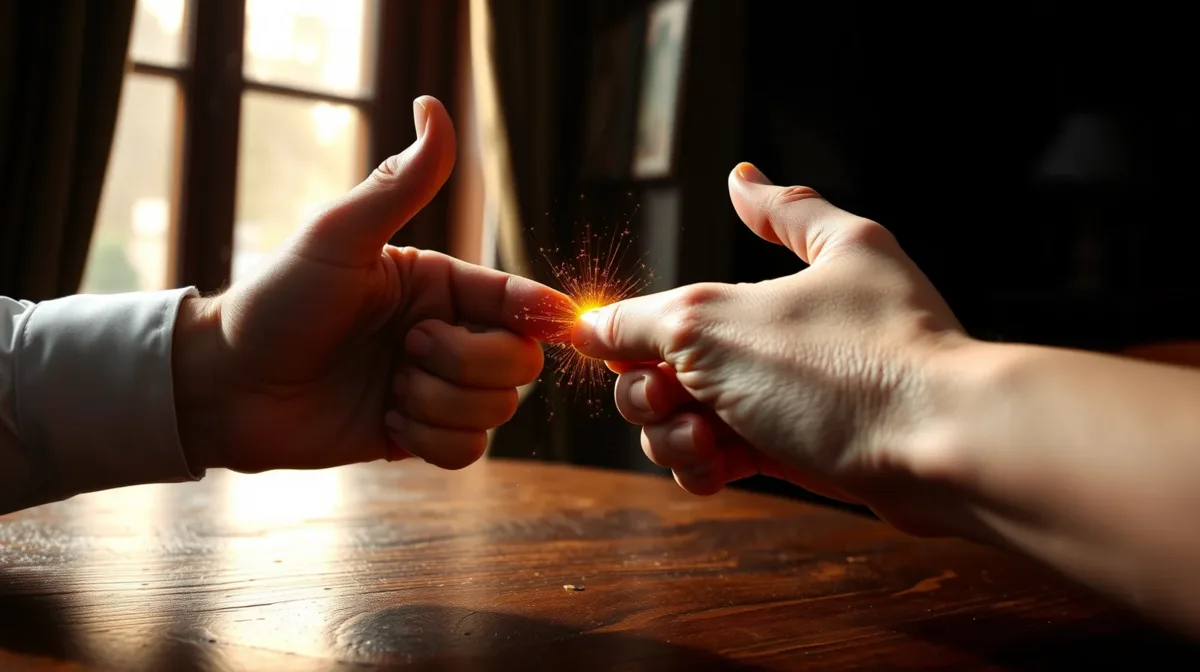
A dream about a thumb war might seem trivial compared to other war dreams, but don't dismiss it. This playful contest carries depth. It often surfaces when you're navigating a rivalry—but one that's more playful than dangerous. Whether with a sibling, friend, or colleague, the dream says: you're locked in a gentle power struggle. And maybe you're taking yourself too seriously. Let's uncover the message behind this finger fight.
Thumb war dreams symbolize a rivalry that's contained and structured—like the game itself, there are rules, a clear opponent, and a winner. It reflects a conflict that hasn't spiraled into all-out war. You may be competing for attention, approval, or resources, but the stakes feel more like fun than threat. The dream often appears when you're in a relationship—friendship or work—where there's gentle teasing or sibling-like competition.
The duality is key: thumb wars are battles you can laugh about. They are social bonding disguised as conflict. If you won in the dream, you might be asserting dominance lightly; if you lost, you may feel outmatched in a playful area. This dream connects to dreams of pillow fights and family dinner dreams—both symbols of domestic rhythm and tension. As war dreams go, this is the lightest variant—but it still points to a need to examine power dynamics.
Pillar III: Where in your life are you engaging in low-stakes competition? Is it a game of one-ups with a friend? A subtle jockeying with a coworker over projects? Your dream invites you to recognize these patterns and ask: is this serving connection or creating distance? The thumb war can also be a call to bring more playfulness into serious situations—to stop fighting and start laughing.
Dream Analysis & Interpretation
Deeper Psychological Analysis
Perspective-Shifting Question
What if the thumb war isn't about winning or losing—but about reminding you that conflict can be a form of touch, connection, and even love?
Deeper Contexts: Analytical Lenses for Your Thumb War Dream
Play as Social Bonding
Source: Carl Gustav Jung, founder of analytical psychology
Play and the Brain
Source: Matthew Walker, sleep scientist and author of 'Why We Sleep'
What to Do Next: Relationship Map
Your thumb war dream points to a relational dynamic worth examining. This exercise helps you map the power play and discover where playfulness can resolve tension.
- Draw your constellation. Put yourself in the center. Place the person you associate with the dream (or a real counterpart) nearby. Add others involved in similar dynamics.
- Mark the energies. Use a green line for supportive connections, red for tension, blue for unmet needs, and gray for indifference. Be honest.
- Identify the "thumb war" relationship. Which connection has a red line but also feels playful? That's your thumb war—competition within safe bounds.
- Ask the key question. For each relationship: Is this conflict serving growth or draining energy? Thumb wars can be fun, but if the red line is thick, it may be time to address the undercurrent.
- Choose one action. Decide on a small step to either inject more play or start a real conversation. For example, if it's a coworker, suggest a fun challenge; if it's a friend, ask directly about the tension.
💡 Expert Tip:
The thumb war dream often appears before holidays or family gatherings. Use the map to set an intention for how you want to engage with relatives.
What This Builds:
This exercise builds relational intelligence—the ability to see interactions as patterns rather than isolated events. You develop skill in assessing whether a relationship is a game or a war, and how to shift it from tension to connection. Leaders and coaches use this to diagnose team dynamics; you can apply it to your personal connections.
Questions for Deeper Reflection
Who in your life do you feel you're in a subtle contest with? What would happen if you openly acknowledged it instead of playing along?
On a scale of 1-10, how much playful energy is in your relationships right now? What could you do to increase it by one point?
If the thumb war ended in a draw, what would that peace feel like? How might compromise benefit you both?
What Comes Next?
Frequently Asked Questions (FAQ)
What does a thumb war dream mean when I'm not aware of any rivalry?
It may reflect a low-level competition you've normalized—like comparing your success with a friend's or striving to prove yourself in a group. The dream brings unconscious dynamics to light, inviting you to choose whether to engage or step back.
Is a thumb war dream a sign of immaturity?
Quite the opposite. Playfulness is a sign of emotional intelligence. The dream suggests you have a healthy ability to approach conflict with humor. Only if the dream feels frustrated or repetitive might it indicate you're avoiding a serious conversation behind a game.
What if I never win in thumb war dreams?
Losing in a dream often points to feeling outmatched in a real situation. But in a thumb war, losing is part of the game. You might need to embrace losing gracefully, or recognize that the competition isn't as important as the relationship.
How is a thumb war dream different from a regular war dream?
A thumb war is contained, playful, and consensual. It's a symbol of manageable conflict where both parties are willing participants. Regular war dreams feel chaotic and life-threatening. The thumb war variant suggests you're in a power struggle, but it's still safe enough to resolve with laughter.






Comments and User Dreams
Be the first to share your dream or opinion!