
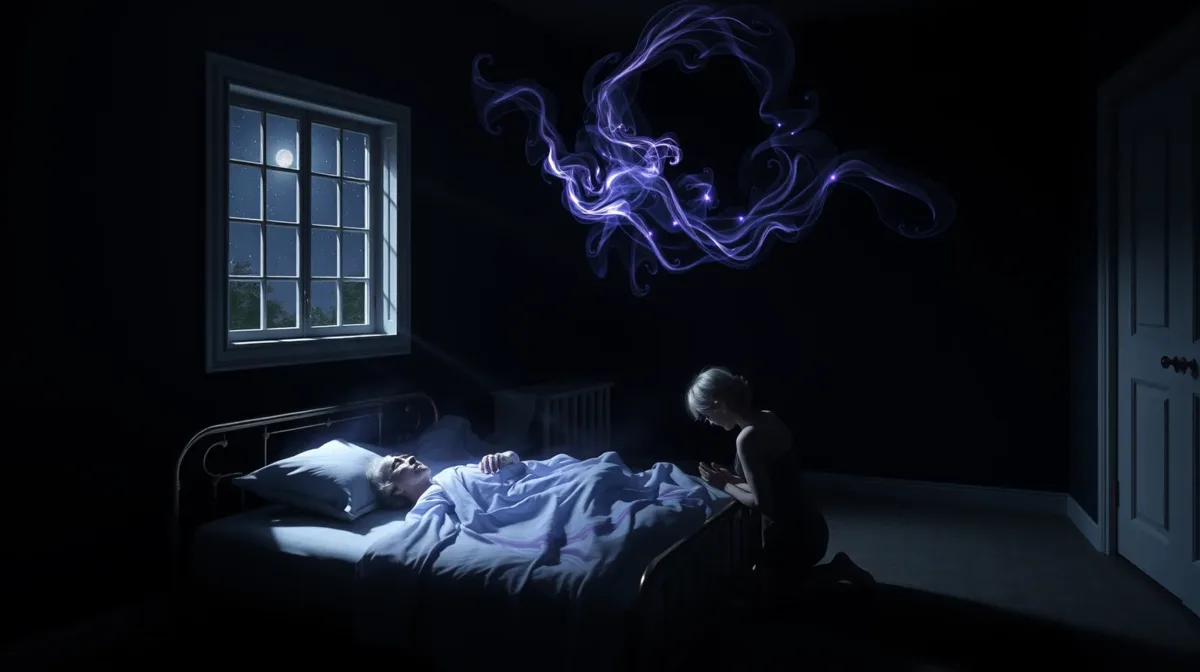
Dream About Grandma Dying: What Is This Fear of Loss Trying to Tell You?
Waking from a dream where your grandmother is dying can feel absolutely crushing. Your heart pounds, your mind races to the worst conclusions, and you may even feel a knot of guilt. Take a breath. You are okay, and she is likely fine. This dream is not a prediction. It's one of the most emotionally charged dreams you can have, and it's incredibly common. It's your psyche's way of processing your deepest attachments and the fear of losing someone irreplaceable. If this dream left you overwhelmed, jump directly to the practical guidance below to ground yourself.
Dreams about your grandmother dying almost always point to your fear of loss, not actual loss. They surface when you feel vulnerable or when life shifts—a move, a relationship change, or a milestone reminding you that time passes. The grandmother represents unconditional love, nurturing, and rootedness. Seeing her die in a dream is your subconscious confronting the terrifying possibility of losing that anchor. It's a deeply human fear, and this dream is a safe space to feel it fully without real-world stakes.
But there is another side. In dream analysis, a dying grandmother can also signify transformation—the end of dependence and the birth of your own ability to nurture. As Jungian psychology suggests, the grandmother is an archetype of wisdom and the collective unconscious. Her death may signal that you are internalizing her wisdom and learning to stand alone. For more on this symbol, explore our main guide on dreams about grandmothers. This dream often intertwines with death dreams and may be accompanied by crying in dreams, emphasizing the emotional weight you carry.
To make this practical, ask yourself: Where in my life do I feel insecure about losing support? Am I facing a transition that makes me crave the safety she represents? This dream is a call to appreciate the love you have while you have it. It also pushes you to prepare emotionally for life's natural cycles. You are being asked to hold both love and fear, recognizing that your capacity to love is also your capacity to grieve. Awareness is the first step toward resilience. By facing this dream, you reclaim control over your deepest anxieties.
Dream Analysis & Interpretation
Deeper Psychological Analysis
Perspective-Shifting Question
What if this dream isn't about losing your grandmother, but about the part of yourself she represents that you're afraid to let go?
Deeper Contexts: Analytical Lenses for Your Dream About Grandma Dying
The Neuroscience of Emotional Processing
Source: Matthew Walker, sleep scientist and author of 'Why We Sleep'
Jungian Archetypal Perspective
Source: Carl Gustav Jung, founder of analytical psychology
What to Do Next: Rewriting the Dream's Ending
Since your dream centered on powerlessness, this technique helps you reclaim emotional agency. By consciously rewriting the ending, you train your brain to shift from fear to empowerment.
- Recreate the scene: Sit quietly and close your eyes. Bring back the dream—the setting, the emotions, your grandmother's presence. Let it play until you reach the moment she dies.
- Freeze the frame: Press pause at the instant before the death. Everything is suspended. You have control now.
- Change the script: Instead of death, imagine a different outcome—she smiles and takes your hand, you have a conversation where she says she is proud of you, or she simply says goodbye peacefully.
- Let it sink in: Stay with this new version for a few minutes. Feel the relief, love, closure. Let your nervous system register this alternative emotional outcome.
- Carry the feeling: Open your eyes. Write down three words that describe how you feel now. Keep them with you as a reminder that you can shift your emotional narrative.
💡 Expert Tip:
If the dream repeats, practice this rewriting just before sleep. It primes your brain for a different dream outcome.
What This Builds:
This technique builds emotional agency—the ability to consciously steer your feelings when overwhelmed. By repeatedly choosing a new ending in imagination, you strengthen neural pathways for resilience. In waking life, this helps you catch fear spirals and redirect toward gratitude and connection.
Questions for Deeper Reflection
On a scale of 1 to 10, how intense is your fear of losing someone you love? What would need to happen to move that number down by one point?
When was the last time you told your grandmother (or a mother figure) what she means to you? What stopped you from saying it more often?
If this dream were a message from your future self, what would it be urging you to do today?
What Comes Next?
Frequently Asked Questions (FAQ)
What does it mean if I dream about my grandma dying but she is already dead?
Dreaming of a deceased grandmother dying again often signifies unresolved grief or a need to reconnect with her memory. It may surface when you need her wisdom or comfort. Your subconscious revisits the loss to help you integrate it more fully.
Does dreaming about grandma dying mean she will actually die soon?
No. Dream research consistently shows that death dreams rarely predict real events. They reflect your emotional state—fear of loss, anxiety about change, or deep love. This dream is about your relationship, not a prophecy.
Why do I feel guilty after dreaming about my grandmother dying?
Guilt is common because it feels like you wished it. But dreams are not conscious wishes. The guilt stems from the intensity of your love. Try expressing your feelings to her in waking life to ease the burden.
How is a dying grandmother dream different from a death dream about a stranger?
The grandmother carries specific personal and archetypal meaning—nurturing, unconditional love, family roots. A stranger's death often symbolizes general anxiety about endings. The grandmother dream is more intimate and signals fears about losing support systems.




Comments and User Dreams
Be the first to share your dream or opinion!